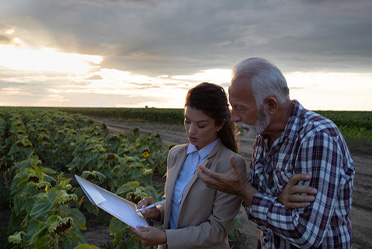
How the Law Recognizes the Realities of Rural Life
In Idaho, livestock, equipment, and land are not merely assets on a balance sheet. They are symbols of a rancher’s legacy, representing not only financial value, but also decades of hard work, stewardship, and tradition. To an outsider, a herd of cattle may look like just another form of property, but for the ranching family, those animals embody years of selective breeding, daily labor, and the hope of passing something meaningful to the next generation.
Fortunately, Idaho law recognizes the importance of ranching and agriculture to the state’s culture and economy. Our legislature has gone to great lengths to provide legal protections that safeguard both the people who work the land and the traditions they uphold. Over the years, Idaho has enacted several statutes designed specifically to protect farmers’ and ranchers’ rights to water, to graze, and shielding those in the agricultural industry from lawsuits. These laws range from open-range protections, which allow livestock to roam and graze freely on unenclosed land without liability to the rancher, to protecting farmers and ranchers from nuisance lawsuits. Overall, Idaho’s legal framework upholds and defends an agricultural way of life.
This chapter gives a brief overview of the major legal protections that every Idaho farmer and rancher should know about. In later chapters, we will look more closely at some of the most important of these protections, why they exist, and the limitations of the protection.
Newcomers who move to rural areas often do not fully understand what working the land looks, sounds, and smells like. Cattle bawl at 3 a.m. Manure has an odor. Tractors run before sunrise. Dust drifts from fields.
Without legal protection, neighbors could easily sue agricultural operations claiming the farm is a “nuisance” simply because while the newcomers dreamed of the country life, they do not fully support normal agricultural activities.
Idaho’s Right to Farm[1] law addresses this exact problem. It generally prevents farms and ranches that existed before a surrounding development from being sued for nuisance as long as they are operating legally and using accepted agricultural practices.
If your operation was there first, and you are following the law, newcomers cannot show up later and shut you down because they do not like the realities of agriculture.
However, this protection has limits. It does not apply to operations that are negligent, operate unlawfully, or create health and safety hazards beyond what is reasonably expected from ordinary agricultural activity.
Another common surprise for outsiders coming to Idaho is that Idaho is home to large tracts of open range.[2] In open‑range territory, livestock are allowed to roam, and drivers have the legal duty to watch for animals on the road.
If a vehicle collides with cattle in open range, the rancher is often not legally responsible simply because the livestock were on the highway.
However, the analysis changes in fenced areas, cities, and herd districts. If a rancher fails to maintain required fencing in those locations, liability may shift back onto the livestock owner.
In 2024, the Idaho legislature passed the Agricultural Protection Area Act[3]. The purpose of this law is to protect and enhance the economic and cultural benefits that working lands provide to Idahoans. Because of this law, each Idaho county now has a process for residents to allow an applicant to place agricultural land in the protection area for a minimum of 20 years.
Idaho law also provides legal protection known as “immunity” in certain livestock-related situations, to prevent professionals from being sued every time an animal behaves unpredictably during “livestock activities.”[4]
This is because livestock are powerful animals with minds of their own. Even calm cattle can bolt, kick, or trample without warning. If someone voluntarily participates in livestock activities, such as rodeos, fairs, or 4-H events, the participant is assumed to have assumed the natural risks that come with the activity.
Similarly, horses hold a special place in Idaho law. Riding, training, competing, and recreational trail riding all come with unavoidable hazards. A horse can spook at a plastic bag, stumble unexpectedly, or react to noise in ways the handler did not predict.
Idaho’s Equine Activities Act[5] recognizes these risks and protects horse owners, trainers, and event sponsors when participants are injured because of horse behavior. Protection may disappear, however, if a horse is knowingly mismatched to a rider, defective tack is used, dangerous conditions are concealed, or conduct is reckless or intentional.
Ranch communities also often host shooting events, safety trainings, and youth programs. Idaho law even provides immunity to ensure these traditional activities can continue without exposing organizers to excessive legal risk[6].
In sum, farming and ranching are more than industries in Idaho. They are multigenerational ways of life that shape our communities, sustain our economy, and feed families across the nation. The work is demanding and nonstop. Livestock can be unpredictable, equipment is powerful, and the land itself presents unavoidable risks.
Recognizing this reality, Idaho’s legislature has enacted laws designed specifically to protect farmers and ranchers from lawsuits that could otherwise threaten their livelihoods.
Idaho’s special protections exist because lawmakers understand something fundamental: agriculture is both essential and inherently risky. Without these laws, many farms, ranches, and family operations could face lawsuits they simply could not afford to fight.
Ranchers who benefit most from these laws maintain good records, use written waivers when appropriate, keep fences and signage in good repair, train workers, fix known hazards, and seek legal advice before disputes arise. When a dispute arises, the rancher who can show careful planning and responsible conduct stands on much stronger legal ground than the one who relied solely on “immunity.”
The key is to ensure that you and your family take the time to understand, document, and reinforce the legal protections available to your operation, so your livestock, your land, and your legacy remain secure for generations to come.
In the chapters that follow, we will take a deeper dive into several of these protections individually, exploring real-life examples, common mistakes, and practical steps you can take to safeguard your land, livestock, and legacy.
[1] Idaho Right to Farm Act: Idaho Code § 22‑4501 et seq.
[2] Open Range and livestock‑on‑highway rules: Idaho Code §§ 25‑2118, 25‑2402, and related herd‑district laws.
[3] Idaho Code §§67-9701 et seq.
[4] Livestock activity liability protections: see Idaho Code § 6‑2001 et seq.
[5] Equine Activities Immunity: Idaho Code §§ 6‑1801 et seq.
[6] See the Idaho Sport Shooting Activities Immunity Act at Idaho Code §6-2702 and protected recreation activity under Idaho Code § 36‑1604.

Call Now At
(208) 345-6308 (Meridian)
(208) 365-4411 (Emmett)


