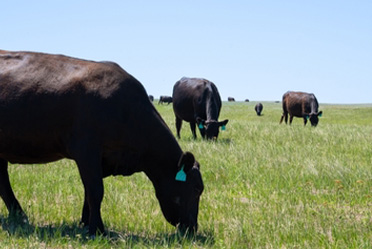
Most of Idaho’s land is “open range.” What does this mean? It means Idaho law favors livestock “free grazing” on our bountiful lands, rather than restricting animals to fenced areas. Idaho citizens and lawmakers encourage ranching and recognize that livestock roaming freely is part of our heritage and economy.
Idaho law defines open range as “all unenclosed lands outside of cities, villages, and herd districts, upon which cattle, by custom, license, lease, or permit, are grazed or permitted to roam.” In plain English, the bottom line is this: any land outside of city limits or a village that is not designated as a herd district is considered open range. That means livestock may legally be on that land, may roam freely, and are protected from being driven off their rangeland. If you own property in open range, you are responsible for fencing out livestock if you want to keep the animals off your property.
As in most western states, this practice began long before Idaho became a state. Cattle herders once turned their herds loose to graze the wide-open rangelands, sharing space with wildlife and settlers alike. When farmers began arriving in the same territory, they had to build their own fences around fields they wanted to protect from free-ranging animals. In other words, the burden was on farmers and other, non-ranching settlers to keep livestock out, not on ranchers to keep livestock in. When Idaho became a state, the practice of open range was transformed into law, and it is still the rule today.
On open range, domestic animals, including cattle, horses, and sheep have just as much right to be on the road as vehicles or wildlife. This means you may encounter cows grazing along a highway, a band of sheep being moved across a country road, or horses grazing outside a fence line. Ranching and rural life take precedence in these areas, and drivers must use caution and share the space.
Idaho law is clear about liability. The statute states: “No person owning, or controlling the possession of, any domestic animals running on open range, shall have the duty to keep such animal off any highway on such range, and shall not be liable for damage to any vehicle or for injury to any person riding therein, caused by a collision between the vehicle and the animal.” In other words, if you hit a domestic animal on open range, the responsibility is on you, not the livestock owner. Ranchers or highway districts may place fences along roads to protect livestock and minimize the chances of vehicles colliding with animals in open range. The presence of fencing, however, does not change the open range status. Moreland v. Adams, 152 P.3d 558 (2007). Note that not all areas of open range are posted with signs, either. All areas outside of city limits or herd districts in Idaho are open range whether they are posted with signs or not. Signs may be placed in areas where there have been numerous animal/vehicle collisions, or where the geography causes livestock to be near the road frequently. These signs are like the warning signs to turn on your headlights when you enter a known dangerous stretch of highway: the signs are there to help you use common sense, and do not create or dismiss the law. Drivers should be extra alert for both wildlife and livestock on the road anytime they are outside of city limits.
In fact, the opposite of liability being placed on the rancher is rality. If you injure or kill livestock on a highway in open range, you are liable to the livestock owner for the value of that animal. And if you harass or drive livestock off its range, you may face criminal charges. Idaho law takes ranching seriously, and protecting livestock is part of protecting our way of life.
The main exception to open range is what Idaho law calls a “herd district.” A herd district is an area formally created by local petition and county approval where livestock owners are required to fence their animals in, rather than letting them roam. In other words, if the majority of landowners who own most of the land within a proposed area petition the county commissioners for a herd district, the county commissioners could create a new herd district. But be careful what you wish for: Once a herd district is established, the county can then levy a property tax on all property owners within the herd district to pay for necessary fencing and cattle guards to keep livestock outside of the herd district. Within these herd districts, the liability rules flip: ranchers and livestock owners have a duty to keep their cattle, horses, or sheep enclosed, and they can be liable for damage if their animals stray onto roads or other property.
Herd districts are often formed in more developed or populated farming areas where free-ranging livestock would interfere with crops, subdivisions, or traffic. If you own land within a herd district, you can expect ranchers to fence their animals in. But if you are outside of a herd district, you are in open range, and the burden falls on you to fence livestock out if you do not want them on your property.
So, if you live or travel in Idaho, be mindful of open range. When you see the “open range” signs while driving, use extra caution looking for animals on the roadway. Drive cautiously, respect livestock, and remember that these animals are not trespassing. They are right where the law says they belong. Cattle owners are NOT liable if you hit an animal on the roadway. Instead, you will likely be liable to the rancher if you injure or kill an animal. If you wish to keep livestock off your private property, then you must erect a “lawful fence,” which we describe in detail in a later chapter. In Idaho, the land belongs to livestock as much as it does to landowners. This is the way it has been since the earliest days, and this is the way it still is today.

Call Now At
(208) 345-6308 (Meridian)
(208) 365-4411 (Emmett)


