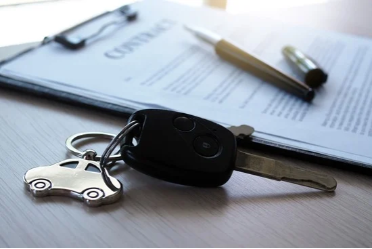
When people establish a living trust, they often ask whether they should transfer their vehicles into it. While most people understand the importance of placing their home and other valuable assets into their trust, cars, trucks, motorcycles, RVs, and recreational vehicles present some different considerations.
Unlike real estate, vehicles can sometimes be transferred to heirs after death without probate, even when they are not titled in a trust. However, there are also situations where leaving vehicles outside a trust can create unnecessary complications and expenses.
So, should you put your vehicles in your living trust? The answer depends on what you own, what those vehicles are worth, and whether the benefits of trust ownership outweigh the potential disadvantages.
The Advantages of Titling Vehicles in a Living Trust
The primary advantage of placing a vehicle in a living trust is avoiding probate.
When a vehicle is properly titled in a trust, the successor trustee can generally transfer or sell it after the owner’s death without obtaining a court appointment as personal representative. This can be particularly valuable for people who own expensive vehicles, motorhomes, classic cars, or substantial vehicle collections.
Another advantage is planning for incapacity. If you become unable to manage your affairs, your successor trustee may be able to manage, insure, or sell a trust-owned vehicle without requiring a court-appointed conservator. This can make managing your property considerably easier for your family.
Trust ownership can also provide continuity. Rather than having ownership pass through your probate estate, the vehicle remains trust property and is administered according to the instructions in your trust.
For families with valuable vehicle collections or vehicles intended to remain in the family, that continuity can be especially useful.
The Disadvantages: Insurance, Financing, and Liability
Despite these advantages, there are reasons why estate-planning attorneys sometimes recommend leaving ordinary cars and trucks titled in their owners’ individual names.
One of the most important considerations is automobile insurance.
Insurance policies are generally written based on the identity of the vehicle’s owner and the people who operate it. When a living trust becomes the titled owner, the insurance company may require changes to the policy, additional documentation, or the trust to be identified as an insured.
If the title and insurance policy are inconsistent, questions about coverage could arise following an accident. For that reason, I recommend consulting your insurance company before transferring any vehicle into a trust.
Financing can also be an issue. If the vehicle has an outstanding loan, the lender may have requirements or restrictions concerning a change in title. Transferring a financed vehicle without first addressing the lender’s requirements can create unnecessary complications.
There is also the question of liability.
A revocable living trust is an estate-planning tool, not an asset-protection device. Placing a vehicle into your trust does not insulate you from liability if you negligently operate that vehicle and cause an accident.
Depending on the circumstances, trust ownership may also complicate questions about who is responsible for liabilities associated with the vehicle. Because a revocable trust generally remains subject to the trust creator’s creditors, placing a vehicle in the trust should never be viewed as a way to protect assets from automobile accident claims.
Finally, there is the practical inconvenience. Transferring vehicles into a trust requires updating titles and potentially coordinating with lenders and insurance companies. If you frequently buy, sell, or trade vehicles, repeating this process may be more trouble than it is worth.

Idaho’s Small-Estate Affidavit May Make Trust Ownership Unnecessary
Idaho law provides an alternative that often makes it unnecessary to title ordinary vehicles in a living trust.
Under Idaho Code § 15-3-1201, certain personal property, including vehicles, may be transferred after death using a small-estate affidavit rather than opening probate.
To qualify, the total net value of the deceased person’s probate estate must not exceed $100,000, and at least 30 days must have passed since death. Other statutory requirements must also be satisfied.
For example, suppose someone dies owning a pickup worth $35,000 and a car worth $20,000, with no other assets subject to probate. Assuming the statutory requirements are met, the family may be able to transfer both vehicles through a small-estate affidavit without opening a probate proceeding.
The Idaho Transportation Department has procedures for transferring vehicle titles using this type of affidavit.
This is often a simple and economical solution.
But What If the Vehicles Push the Estate Over $100,000?
This is where careful planning becomes important.
The $100,000 limit applies to the entire probate estate, not separately to each vehicle.
For example, imagine someone dies owning a $65,000 pickup, a $45,000 motorhome, and $20,000 in individually owned bank accounts without beneficiary designations.
If all three assets are subject to probate and have no outstanding liens, the probate estate totals $130,000.
Even though none of the individual assets is worth more than $100,000, the estate exceeds Idaho’s small-estate affidavit limit.
In that situation, the family may need to open a probate proceeding to obtain legal authority to transfer the vehicles and other property. Probate involves court filings, administrative requirements, legal expenses, and additional time.
Idaho also provides certain simplified court procedures, including summary administration for qualifying surviving spouses, but those alternatives are not available in every situation.
Had the vehicles been properly titled in the living trust, the successor trustee generally could have handled their transfer or sale without opening probate solely for those assets.
So, What Do I Recommend?
For many clients, I generally recommend transferring vehicles into their living trust for the reasons discussed above, so long as the vehicles have no lien and the client’s insurance company will add the trust as an “additional insured” on the policy.
Sometimes, the insurance, financing, and administrative considerations may outweigh the benefits, particularly when the vehicles are modest in value and Idaho’s small-estate affidavit is likely to be available. It is also important to consider how the vehicles are titled between spouses, whether a valid survivorship arrangement exists, and whether other assets will remain outside the trust.
The bottom line is that there is no one-size-fits-all answer. A living trust should make managing your property easier, not unnecessarily complicate your life.
The goal is to strike the right balance between convenience during your lifetime and avoiding unnecessary expense and difficulty for your family after your death.
A little planning now can make a substantial difference later.


